

EMPOWERING TOMORROW: TOP 5 SOLAR ENERGY INNOVATIONS… DRIVING THAILAND TRANSFORMATION IN 2026
Southeast Asia is accelerating its energy transition with growing momentum from both policy and capital. Stronger regulatory support and expanding clean‑energy financing are creating a more predictable investment environment, enabling governments and developers to move from planning to delivery. According to 2025 Boomberg NEF report on Southeast Asia, this year’s auction pipeline — nearly 20 GW of clean power capacity, concentrated in the second half of 2025 — signals a shift from ambition to actionable procurement across the region, and is already reshaping project pipelines and developer strategies.
“For Thailand, the visionary Power Development Plan (PDP) reflects this ambition, setting an inspiring goal to reduce greenhouse gas emissions by 47% by 2035 and net-zero emissions by 2050, alongside a gradual liberalization of its power market. Thailand is set to approve its Direct Power Purchase Agreement (DPPA) policy later this year, which will allow corporations to directly procure clean power from third-party generators.”
The Southeast Asia and Thailand energy landscape is undergoing a rapid transformation, driven by the urgent need for sustainable solutions. Several key trends are emerging that promise to revolutionize how we generate, store, and utilize energy.
One significant development is the rise of Lithium Iron Phosphate (LFP) technology in Battery Energy Storage Systems (BESS). The BESS market is experiencing explosive growth, projected to reach USD 76.7 billion in 2025 and soar to USD 172.2 billion by 2030, with a CAGR of 17.6%.Fueled by enhanced storage efficiency, improved safety, and declining lithium-ion costs, the surge in the BESS market increasingly favors LFP batteries for their enhanced safety, longer cycle life, and cost-effectiveness, making them ideal for both stationary storage and electric vehicle applications. As EV adoption grows, economies of scale further drive down LFP prices, creating a positive ripple effect throughout the renewable energy ecosystem. Countries worldwide are actively investing in BESS to stabilize renewable energy integration and pave the way for a cleaner energy future.
Complementing advancements in energy storage is the growing trend of integrating renewable energy sources with energy storage. At COP30 (2025), global leaders emphasized the importance of accelerating the clean energy transition to combat climate change and reduce greenhouse gas emissions. Nations are now integrating renewable generation with energy storage as a core strategy in their national energy plans.
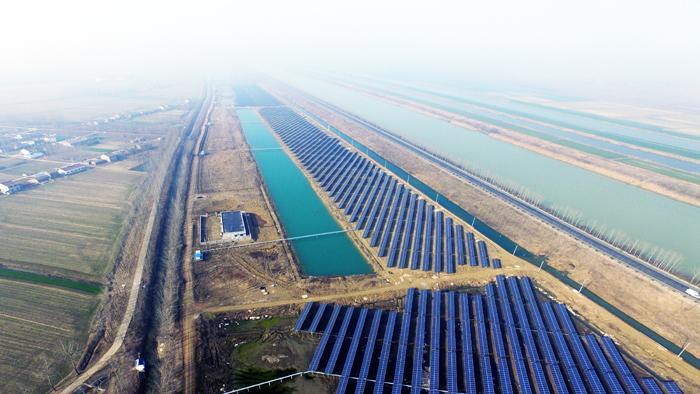
A key strategy to maximize renewable energy production involves Creative Land Use for Renewable Applications. Transforming underutilized land into renewable energy sites is gaining traction worldwide. In Shandong Province, China, an abandoned mine has been ingeniously converted into a 150 MW renewable power.
Continuing to push the boundaries of renewable energy is the development of advanced next-generation high-efficiency solar PV. Solar PV remains the cornerstone of renewable energy generation, and recent breakthroughs in perovskite/silicon tandem solar cells have propelled efficiency levels to 31%, with even greater potential on the horizon.
Finally, Sustainable Data Centers are crucially important for the digital economy, yet their massive energy consumption causes significant ESG concerns. Energy costs can account for 30–50% of operating expenses, and a single hyperscale data centers can consume as much power as a small city. Operators in Europe are addressing this issue by prioritizing renewable energy, efficiency, heat reuse, cooling efficiency and water usage.
By Elva Wang, Group Director of South, Southeast & Central Asia, Trinasolar Asia Pacific


