

Thai-Developed “AI Carbon Auditor” Wins World Bank’s Low Carbon City Project!
Following the announcement of the “Low Carbon City” strategy during the IMF-World Bank meetings hosted by Thailand last week, the Program Management Unit for Competitiveness (PMUC)—under the Office of Research and Innovation for Competitiveness and Area-based Development (ORICD)—has highlighted a major milestone: its support for the development of “Digital MRV,” also known as an “AI Carbon Auditor.” This Thai-developed innovation automates the monitoring, reporting, and verification (MRV) of carbon credits. On the global stage, it has been recognized as a vital “national digital data platform” for ensuring transparency within the carbon credit market. The system has now gained international recognition and is being utilized as a core infrastructure for the World Bank’s “Low Carbon City” initiative—in collaboration with EXIM Bank and Krungthai Bank (KTB)—to elevate the credibility of carbon credits to international standards and facilitate expansion into overseas markets.
As the global carbon market continues to grow, the MRV (Measurement, Reporting, and Verification) process has become the cornerstone for determining the value and reliability of individual carbon credits. Buyers, investors, and regulatory bodies worldwide demand data that is transparent, verifiable, and independently audited; if the data lacks credibility, the value of the carbon credits diminishes accordingly.
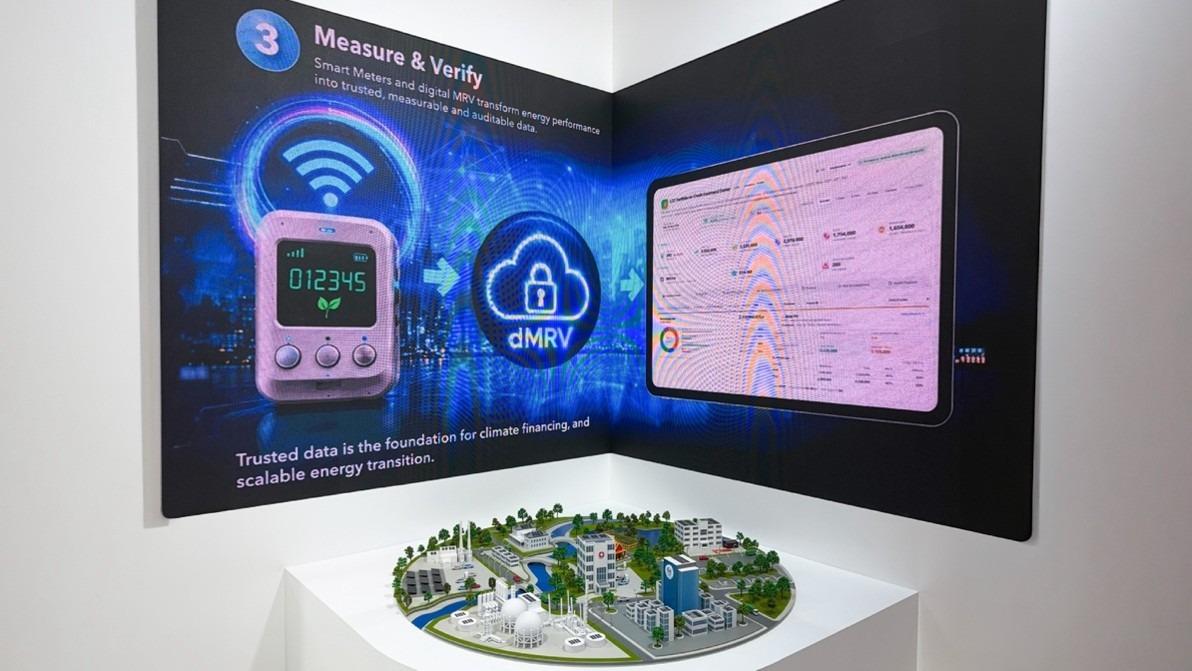
Currently, Thailand’s carbon credit market faces three significant challenges: prohibitively high verification costs and a certification process that can take years to complete. Data reliability is a major challenge, largely stemming from traditional MRV (Measurement, Reporting, and Verification) processes that rely on manual field data collection and documentation. These periodic checks are time-consuming, costly, and prone to errors. This is why Digital MRV (d-MRV)—which leverages IoT sensors, cloud systems, and AI to continuously collect and process data at the source—is gaining significant traction in global carbon markets. It ensures data traceability and reduces the need for manual intervention.
To address these issues, a Digital MRV platform has been developed by Wekin (Thailand) Co., Ltd., under the leadership of project head Dr. Sakayong Pattanawekin. Acting as an “AI Carbon Auditor,” the platform digitizes the verification process, delivering greater accuracy and speed while drastically reducing costs. This opens doors for smaller-scale projects and SMEs to participate more easily in the carbon credit market.
The platform’s key strength lies in its use of advanced technology: it employs blockchain for data stamping and utilizes AI to perform three-tier cross-verification. Combined with robust cybersecurity measures via VPN, the system ensures transparent traceability of carbon credits. It effectively closes loopholes that could lead to “greenwashing,” thereby building confidence among buyers and investors in line with international standards.
Wekin’s system is designed to cover the entire MRV lifecycle—from capturing data at the source via IoT devices to aggregating and reporting that data through a cloud-based system and database. The system incorporates AI-based verification and blockchain-based data timestamping, aligning with the Monitoring, Reporting, and Verification (MRV) requirements of international carbon standards, such as the Gold Standard. This enhances the prospects for carbon credits generated by projects in Thailand to reach international buyers and secure foreign funding.
Developed over nearly three years with support from the Program Management Unit for Competitiveness (PMUC), the system has proven competitive enough to outperform international alternatives. It was selected as the core infrastructure for the “Low Carbon City” project—an initiative backed by the World Bank and the Thai Ministry of Finance, managed by Krungthai Bank, and co-funded by EXIM Bank. Beyond saving Thailand tens of millions of baht annually in software import costs, the platform has also been adopted by the World Bank as a case study for other nations.
With its robust traceability, compliance with international standards, and selection as the primary infrastructure for a global-scale project, the “d-MRV” system by Wekin serves as more than just a substitute for foreign software; it has the potential to function as a carbon data infrastructure for other countries, marking a significant milestone in bringing Thai technology to the global stage.
Currently, the “AI Carbon Auditor” platform is expanding its reach to neighboring countries, including Indonesia, Malaysia, and India. Future development plans include integrating support for “Climate Finance” mechanisms—specifically by leveraging carbon credits to offset interest rates—thereby assisting entrepreneurs in transitioning their businesses toward greater sustainability.


